
2026 2nd Quarter investment bulletin
Executive Summary
Markets entered 2026 with strong momentum before experiencing a modest pullback late in the quarter amid rising geopolitical tensions and higher oil prices.
Market leadership broadened, with value, small-cap, and international equities outperforming large-cap U.S. growth stocks.
Fixed income markets remained stable as the Federal Reserve held interest rates steady during the quarter.
Recent volatility reflects a combination of elevated valuations and external shocks, creating a more balanced and potentially attractive environment for future investment opportunities.
Market Overview
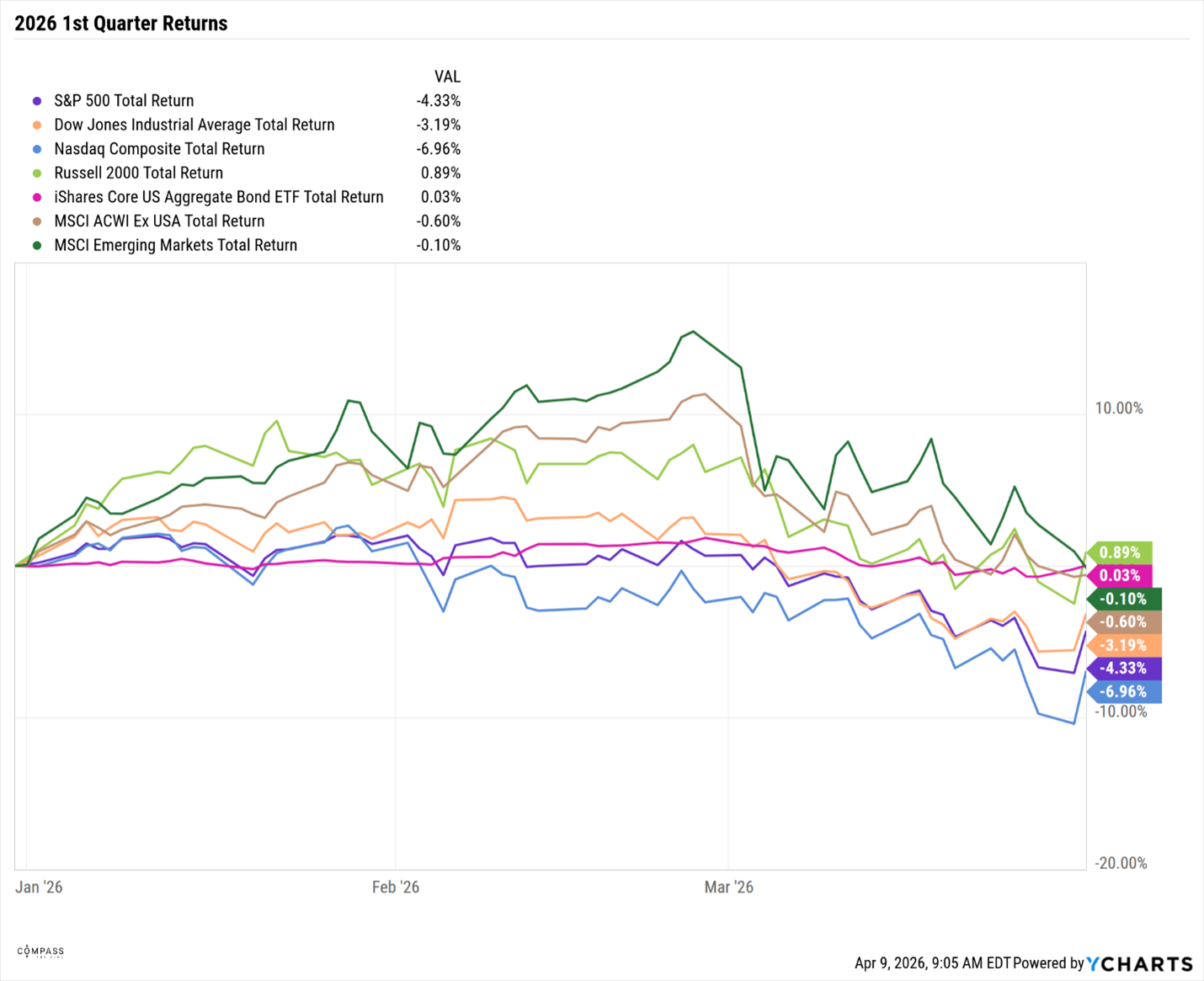
Equity markets experienced mixed performance during the first quarter of 2026. As you can see in the chart above, early gains pushed major indices toward all-time highs before increased volatility emerged in late February and March. The large-cap technology-heavy Nasdaq index led U.S. markets lower, declining approximately 6.96%, with peak drawdowns exceeding 10% during the quarter. In contrast, value-oriented and small-cap stocks demonstrated relative resilience, remaining positive for much of the period before giving back some gains late in the quarter. International equities declined modestly but continue to outperform U.S. markets over the past two years, supported by relatively lower valuations and improving earnings expectations abroad. Rising geopolitical tensions—particularly in the Middle East—contributed to increased volatility, as oil prices moved sharply higher and weighed on broader market sentiment.
Portfolio Positioning
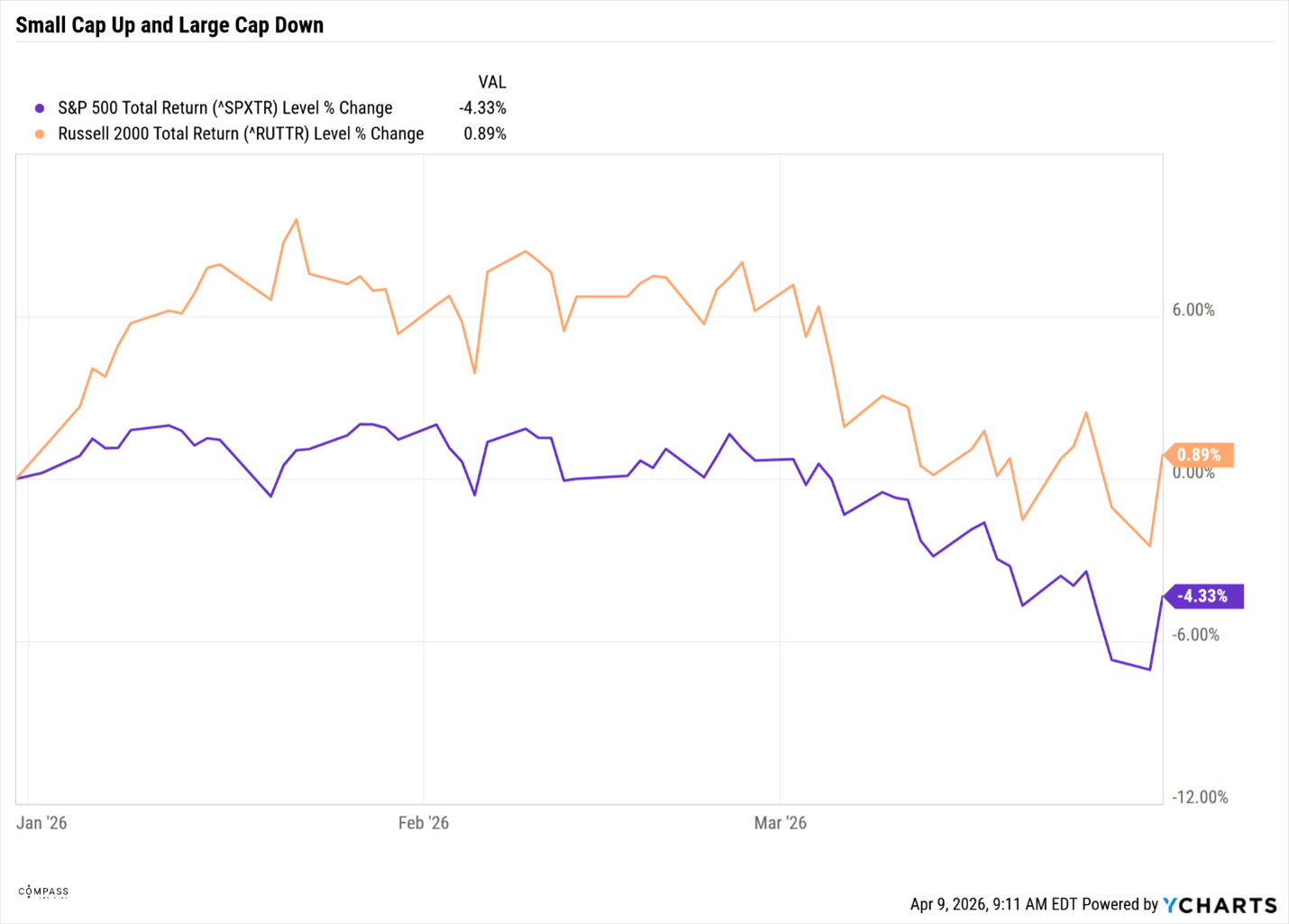
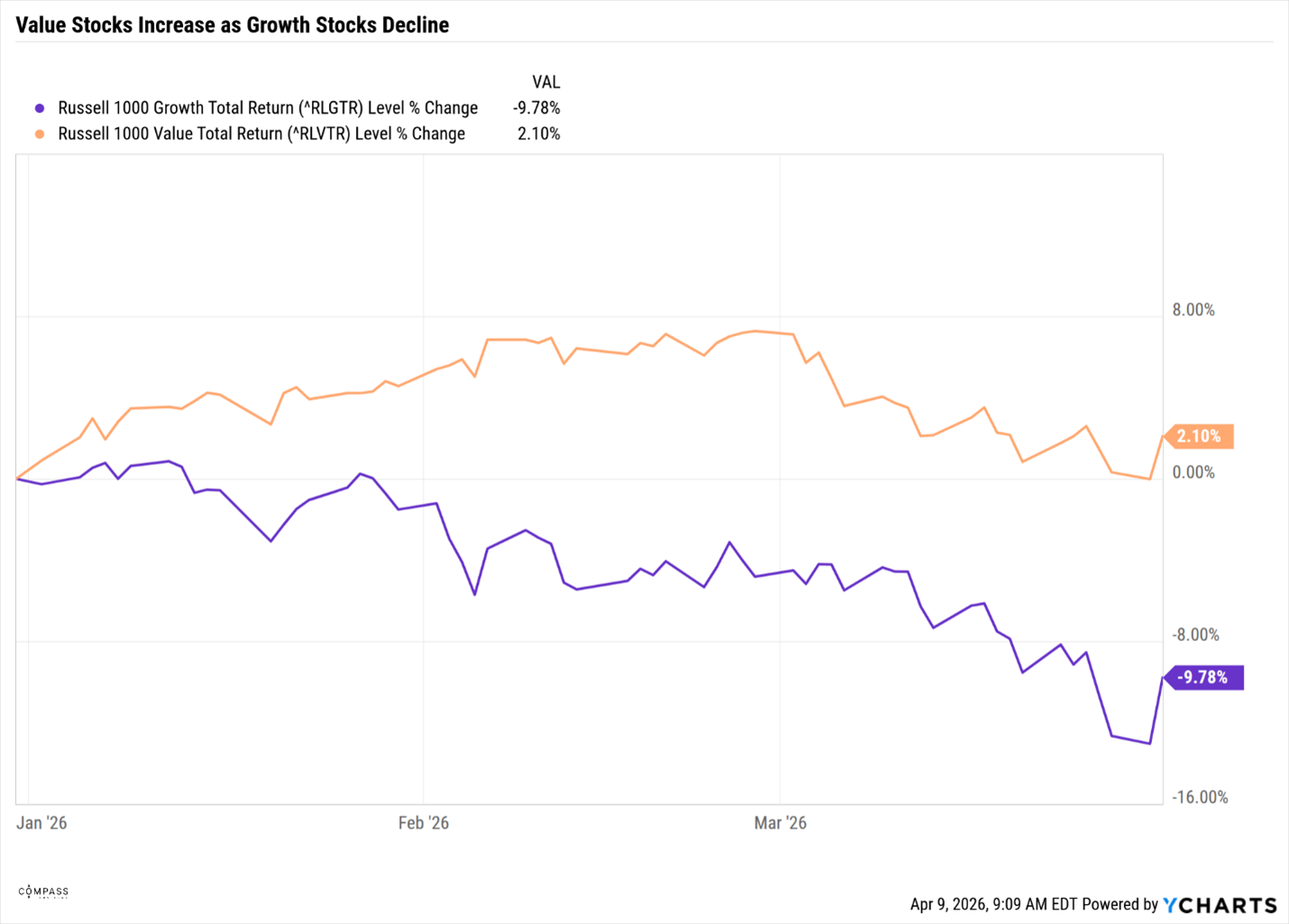
The chart above illustrates the performance gap between large cap and small caps during the quarter, while the chart below shows a wider gap that formed between growth and value, with value outpacing growth by a wide margin. Your portfolio’s broad diversification played an important role in navigating the quarter’s volatility. The most significant declines were concentrated in technology and growth-oriented sectors, which represent a more measured allocation within your overall investment strategy. This diversified approach helped reduce the overall impact of market declines, reinforcing the importance of maintaining exposure across asset classes, sectors, and geographies.
Hedged Stock Allocation
Our use of option-based strategies—referred to as “hedged stock” positions—has continued to provide meaningful benefit in 2026, similar to their performance during prior periods of market stress. These strategies (including positions managed by Innovator, Allianz, and PGIM) are designed to:
Provide a downside buffer (typically 15%–20%) over a defined outcome period
Participate in market gains up to a predefined cap, generally in the low double-digit range
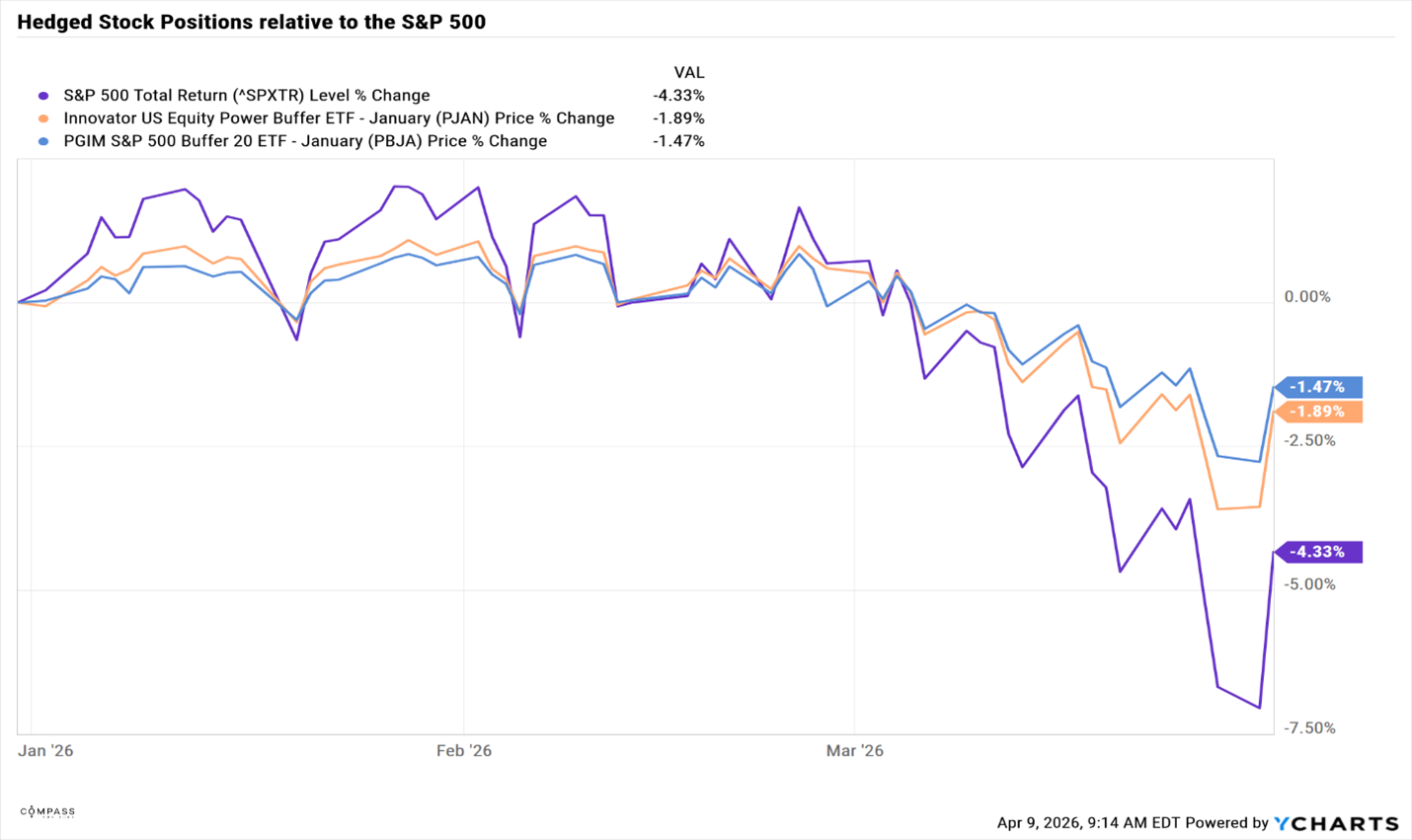
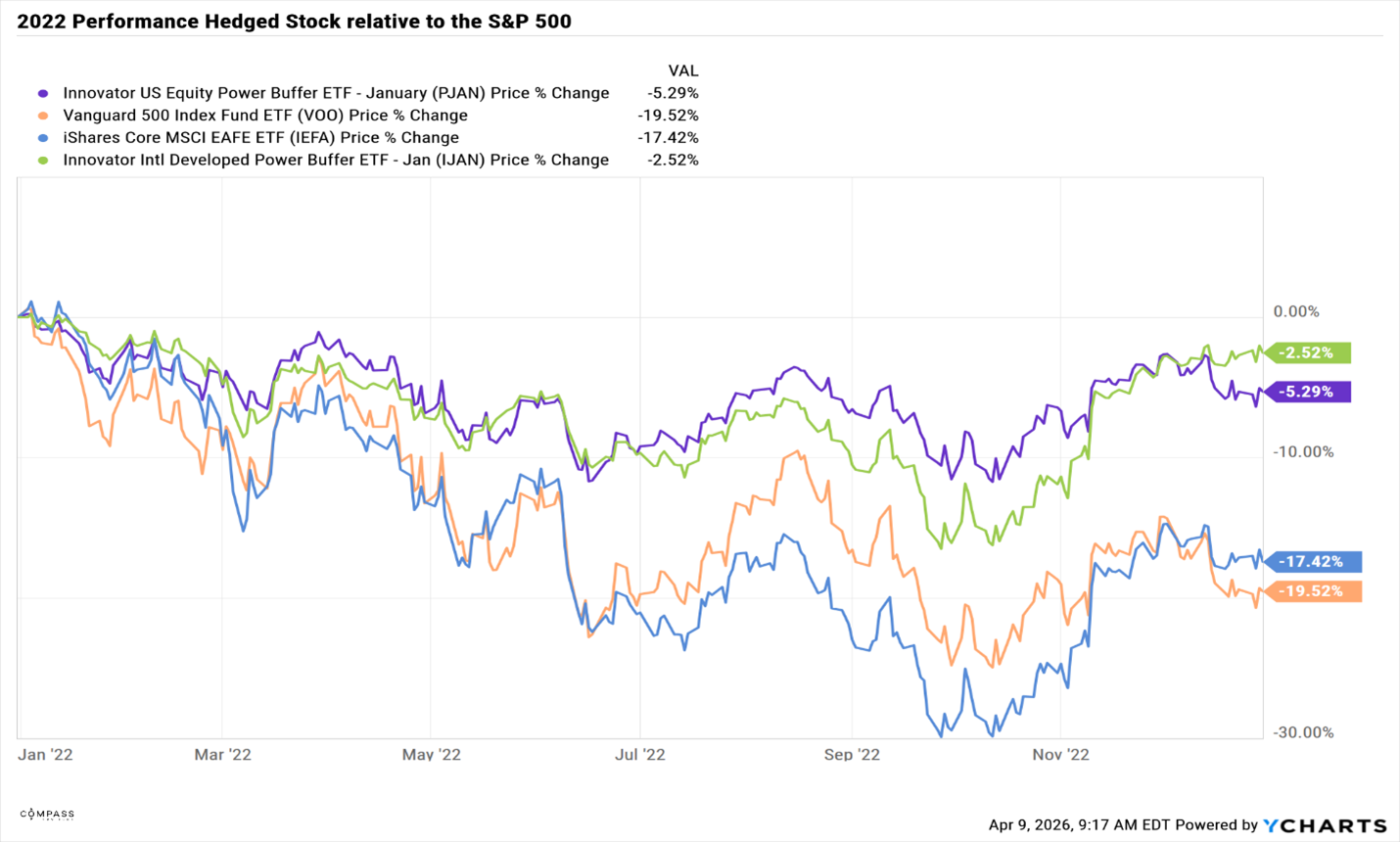
At the end of the outcome period, losses within the buffer range are absorbed, resulting in little to no downside over that timeframe. While these strategies limit some upside participation, they play a critical role in reducing volatility and improving consistency of returns. In the two charts below you can see how the hedged stock positions have fared better than the S&P 500 Index in Q1 2026 along with a chart from 2022 illustrating another effective period vs. the S&P 500.
Coping with Volatility
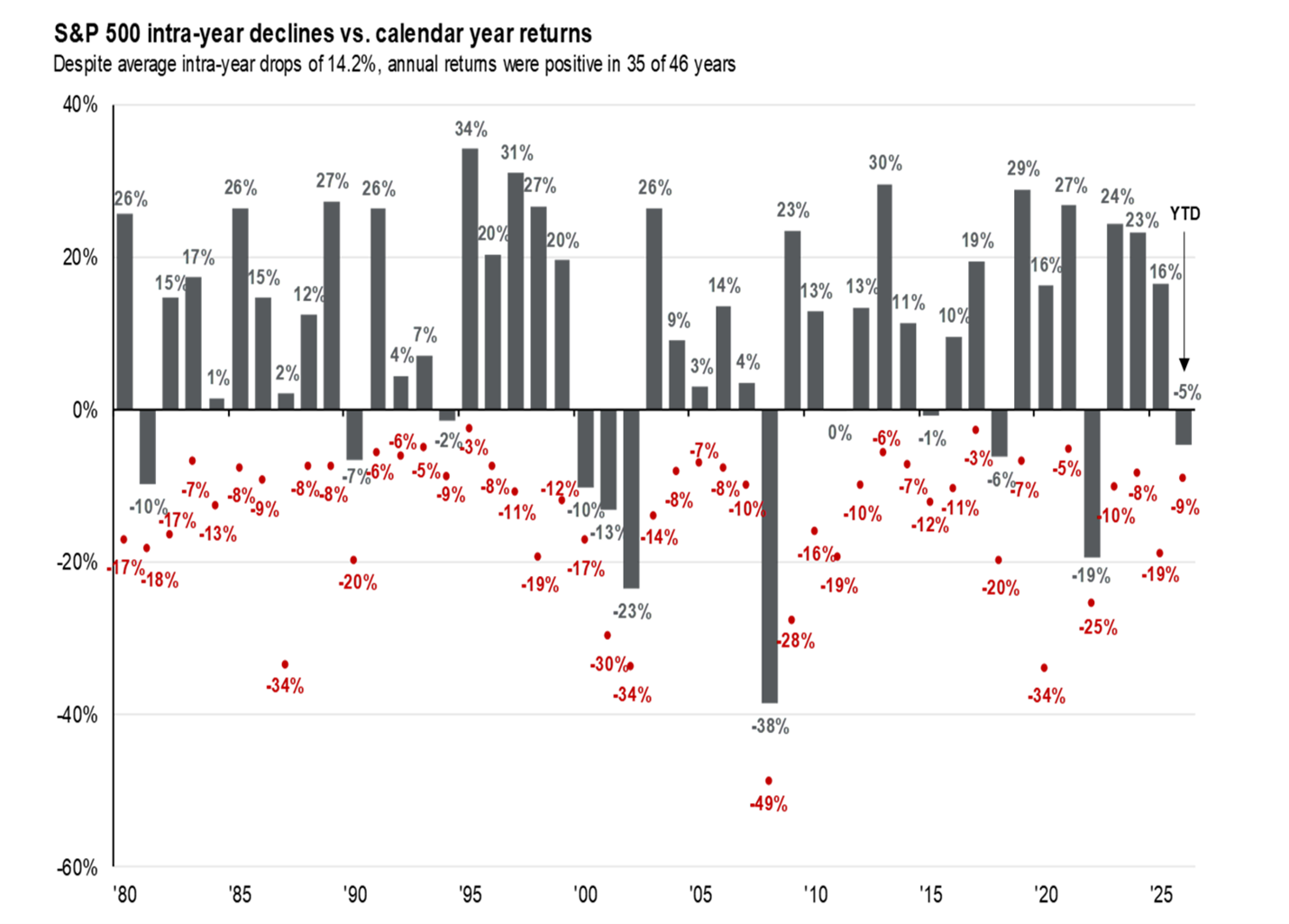
Periods of market volatility, such as those experienced late in the quarter, are a normal and expected part of investing. Historically, even in years that ultimately deliver positive returns, markets often experience meaningful intra-year declines. Attempting to time these movements—by exiting during downturns and re-entering later—has consistently proven to be detrimental to long-term outcomes.
Moments like these can create the temptation to reduce risk after markets have already declined. However, disciplined investors who remain focused on long-term objectives are typically better positioned for success.
The chart below highlights the S&P 500's annual returns since 1980 and includes the deepest drawdown experienced in each respective year. Despite the intra-year drawdowns shown below, only 11 of those 45 years ended as a negative return on the calendar year.
Seizing Opportunity
Market declines, while uncomfortable, often create increasingly attractive opportunities.
As stock prices fall relative to the underlying earnings of businesses, valuations improve, and the potential for future returns increases. While it is impossible to precisely identify market bottoms, we view periods of volatility as opportunities to incrementally reposition portfolios.
After several years of above-average market returns, valuations had become elevated, making a period of consolidation or pullback increasingly likely. If volatility persists, we expect to:
Gradually reallocate from cash, bonds, or hedged strategies
Increase exposure to equities at more attractive valuations
This disciplined, incremental approach has been a consistent driver of long-term success.
Looking Ahead
While uncertainty remains, several themes will likely shape markets in the coming months:
Continued volatility as markets adjust to geopolitical risks and economic data
Interest rate uncertainty, with the Federal Reserve balancing inflation and growth
Broader market leadership, with opportunities extending beyond large-cap U.S. technology stocks
Improving valuation opportunities as markets reset from elevated levels
We remain confident that maintaining a disciplined, diversified approach will position portfolios well for both near-term uncertainty and long-term growth.